

Designing the Future of Consumption
See how generative AI reshapes ad targeting, creative testing, and personalization.
See how generative AI reshapes ad targeting, creative testing, and personalization.
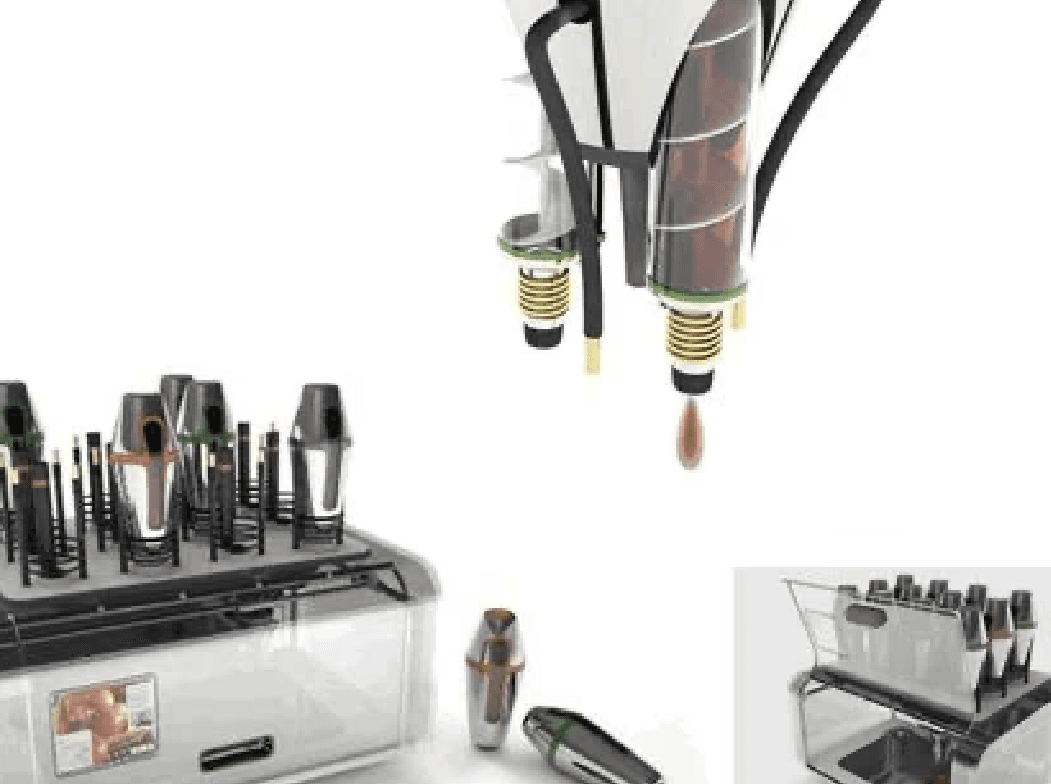
Plant-based culture is increasingly being shaped not only by new ingredients, but by new methods of making. Among these, 3D food printing stands out as a key interface where biotechnology, design, and consumption converge. Rather than treating food as a fixed product, 3D printing reframes it as a material system one that can be structured, programmed, and fabricated on demand.
In this model, food is no longer defined solely by what it is made from, but by how it is built. Using plant-based pastes, cultured cells, or bioengineered compounds as printable “inks,” 3D printing allows texture, density, and form to be precisely controlled. Structure becomes a design variable. Mouthfeel, layering, and internal geometry are no longer outcomes of traditional cooking, but results of computational and material decisions. Eating becomes an encounter with fabrication.
This shift transforms plant-based consumption from substitution to construction. Instead of replicating meat or dairy through imitation alone, 3D printing enables the creation of entirely new food logics. Protein, fat, and fiber can be arranged spatially, allowing designers to invent formats that do not exist in nature. Food becomes closer to an engineered object comparable to a designed product rather than a natural commodity.
Design plays a central role in making this system culturally legible. The visible layers, printed forms, and customized shapes turn invisible biotechnology into something tangible and experiential. 3D printing becomes not just a production method, but a visual and material language through which technological food enters everyday life.
Within this framework, sustainability is embedded through fabrication logic. Waste-based ingredients, alternative proteins, and localized production can be integrated directly into the printing process. Environmental impact is addressed through how food is structured and produced, rather than through moral messaging.
Here, consumption is redesigned at the level of fabrication. 3D food printing does not simply support plant-based culture it actively redefines what food can be, how it is made, and how technological systems shape what ends up on the plate.