

The Poetics of Algae: Designing a kitchen that breathes with us.
The psychology behind creating online stores that convert first-time visitors.
Imagine, for a moment, that your kitchen is not a collection of inert boxes and cold steel, but a glowing, green lung. What if the very walls that shelter your morning coffee were pulsing with the quiet, rhythmic vitality of a primordial forest?
In the traditional kitchen, we consume. We take from the earth, we process, and we discard. But as we move deeper into a century defined by our need to repair our relationship with the biosphere, the "Poetics of Algae" offers a different blueprint. This is the kitchen as a bioreactor, an experimental space where the line between inhabitant and environment dissolves.
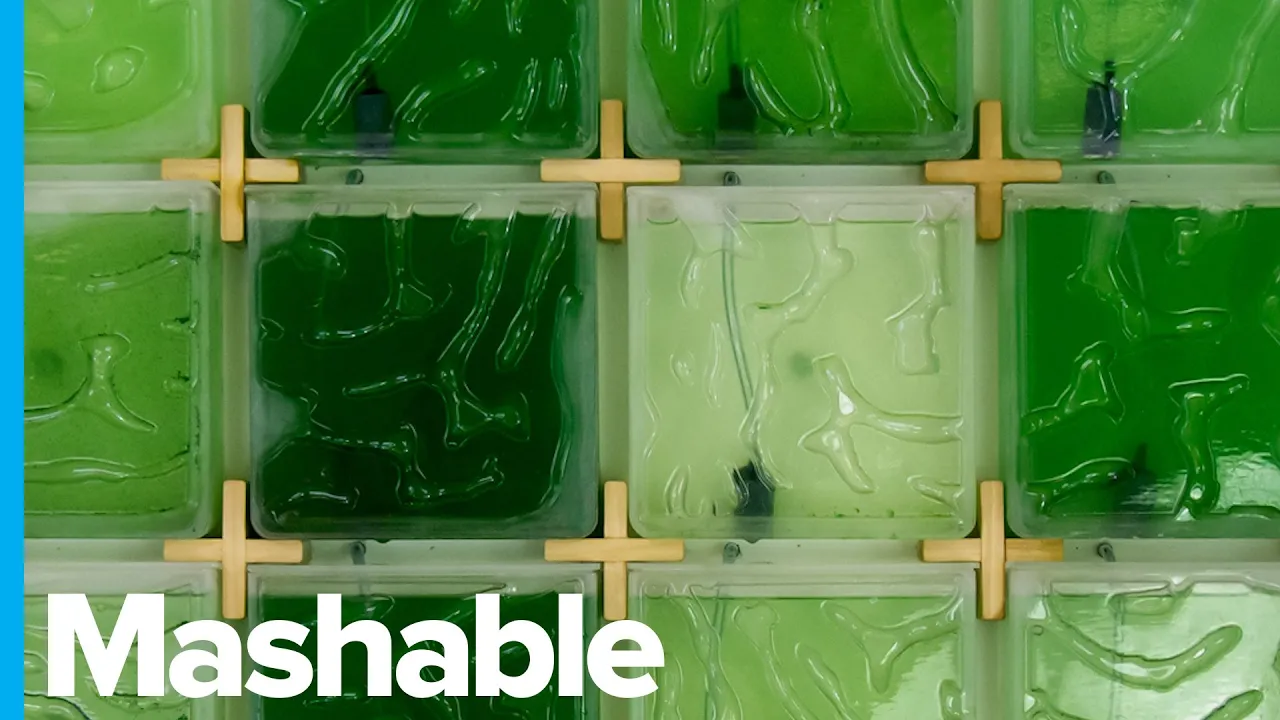
In this visionary space, sleek glass cabinetry is replaced by photobioreactors—translucent panels filled with swirling plumes of Chlorella or Spirulina. These aren't just decorative; they are functional partners.
Atmospheric Exchange: As you cook, the algae feast on the carbon dioxide you exhale and the heat generated by your stove, scrubbing the air and exhaling pure oxygen back into the room.
The Living Harvest: Your "pantry" is a tap. With a simple turn of a valve, you harvest nutrient-dense biomass to fold into breads, whisks into broths, or blend into vibrant morning tonics.
Thermal Intelligence: The water-based systems act as a thermal mass, absorbing excess heat during the day and radiating it back at night, stabilizing the microclimate of your home.
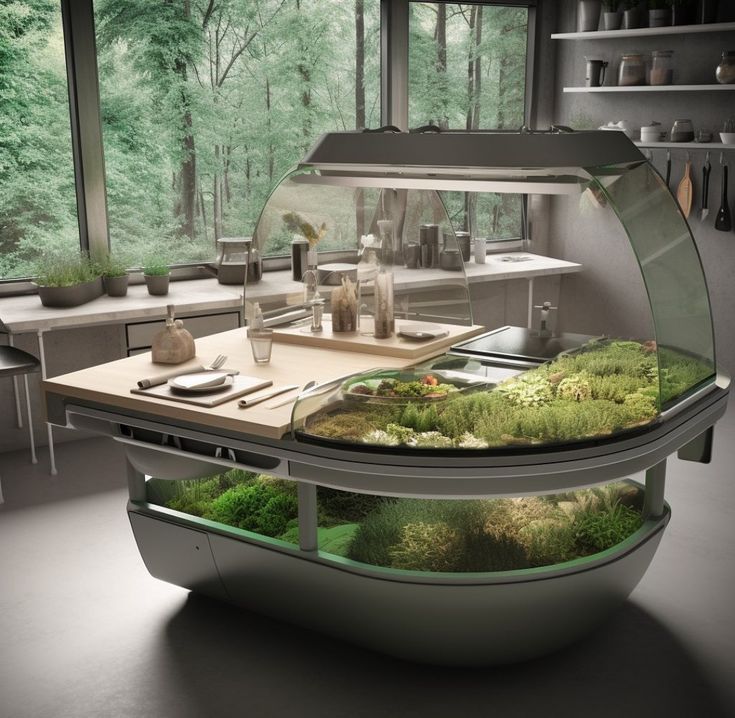
To live with algae is to adopt a new set of rituals. We transition from being mere "users" of a kitchen to being curators of a colony. The act of "cleaning" the kitchen shifts into an act of "tending" the garden. There is a profound, quiet beauty in watching the bubbles rise through a glass wall—a visual metronome that syncs our domestic pace with the tempo of biological growth.
This isn't about self-sufficiency in a survivalist sense; it’s about sensory reconnection. It’s the "What if?" that asks: What if our homes gave back more than they took? By inviting the oldest organisms on Earth into our most intimate domestic spaces, we aren't just designing a kitchen. We are designing a sanctuary where the act of eating becomes a radical participation in the planet’s breath. We aren't just feeding ourselves; we are feeding the future.